

























































How to improve your sleep
Dear Friend,
Hope everyone is having a good week. Autumn evenings are closing in, and I’ve been trying to use the darker nights as a chance to rethink my evening routines.
Two weeks ago, I deleted Instagram from my phone. It was not actually for the reason discussed below, but it has had a very positive unintended consequence.
Normally, I’d spend about 30 minutes scrolling through reels before bed — it was my way of “switching off.” But since I stopped, I’ve noticed something remarkable: I fall asleep faster, I stay asleep, and I’ve been waking up feeling more refreshed than I have in years. Honestly, I feel like I’ve had some of the deepest sleeps of my life.
And it turns out, this isn’t just in my head — the science backs it up.
The Science of Screens and Sleep
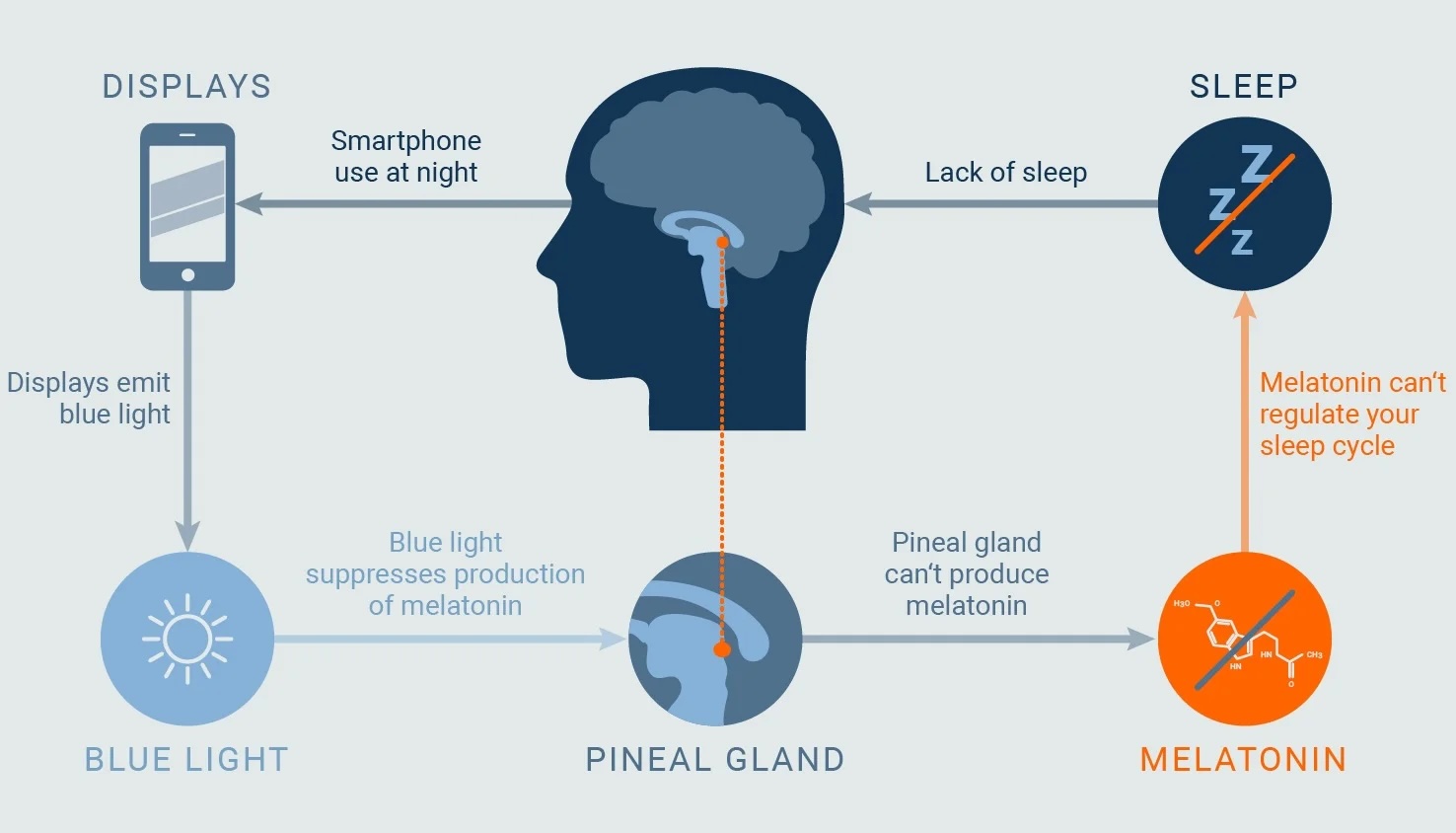
Our bodies run on a circadian rhythm — a roughly 24-hour cycle regulated by the suprachiasmatic nucleus (SCN) in the brain. The SCN takes its main cues from light. When it gets dark, the pineal gland releases melatonin, a hormone that signals to the body that it’s time to sleep.
Blue light, which is strongly emitted by phone and tablet screens, disrupts this system. Specialized cells in the retina (called intrinsically photosensitive retinal ganglion cells, or ipRGCs) are particularly sensitive to blue wavelengths. When stimulated, they send signals to the SCN to “stay awake,” suppressing melatonin release.
In simple terms:
Darkness = melatonin rises = brain winds down.
Blue light = melatonin suppressed = brain stays alert.
But it’s not only biology. The act of scrolling is stimulating. Novelty, movement, and reward (those unpredictable reels or notifications) activate the dopamine system, keeping the brain in a state of alertness rather than relaxation.
What the Studies Say
Plenty of research has explored the effect of screen time before bed:
A Harvard study (Chang et al., 2015) compared people who read from an e-reader before bed with those who read a paper book. The e-reader group had 55% less evening melatonin, took 10 minutes longer to fall asleep, and felt less alert the next morning.
A meta-analysis of 20 studies (Exelmans & Van den Bulck, 2016) found that evening screen use was consistently associated with shorter sleep duration and worse sleep quality across both children and adults.
In a controlled trial of adolescents (Cajochen et al., 2011), just 2 hours of exposure to a bright screen reduced melatonin levels by 23% compared to a dim screen.
Even short exposures matter: another study showed that as little as 30 minutes of smartphone use at night delayed melatonin onset by ~30 minutes.
Taken together, the evidence is pretty clear — late-night screen time delays sleep onset, reduces total sleep, and diminishes next-day alertness.
Why This Matters
Sleep isn’t just rest — it’s an active biological process critical for memory consolidation, immune function, emotional regulation, and even clearing toxins from the brain via the glymphatic system. Deep, uninterrupted sleep is when the body does its best repair work.
By cutting out my 30 minutes of reels before bed, I’ve essentially removed a source of blue light and stimulation right when my brain needs calm. The result has been earlier melatonin release, faster sleep onset, and a deeper, more restorative night’s sleep.
A Few Key Takeaways
Blue light from screens suppresses melatonin, delaying sleep.
Stimulation from scrolling keeps the dopamine system active and alert.
Studies show even 30–60 minutes of evening screen time worsens sleep quality.
Limiting screens before bed restores natural circadian rhythms and improves sleep depth.
So if you’re looking for a quick win in your routine, I’d recommend experimenting with reducing evening screen use — whether that’s deleting an app, leaving your phone outside the bedroom, or swapping reels for a book. Small changes add up, and your sleep (and mornings) might just thank you for it.
Drug of the week
Etoposide
Etoposide is a topoisomerase II inhibitor that prevents DNA unwinding, leading to DNA strand breaks and apoptosis in rapidly dividing cancer cells.
It is given orally or by IV infusion and is used in small cell lung cancer, testicular cancer, lymphomas, and certain leukemias.
Common side effects include nausea, vomiting, alopecia, and myelosuppression (neutropenia, anemia, thrombocytopenia).
Important adverse effects are severe bone marrow suppression (dose-limiting), risk of secondary leukemia (with long-term use), and hypotension with rapid IV infusion.

A Brain Teaser
A 78-year-old woman has been in hospital for two months after an initial admission with a fall, complicated by severe pneumonia. She reports a four-day history of worsening diarrhoea.
Her observations are as follows: blood pressure 85/40mmHg; heart rate 115/min; respiratory rate 22/min; temperature 38.1ºC; oxygen saturations 96% on air.
Her stool sample is reported as Clostridium difficile (C. difficile) positive. A CT scan of the abdomen and pelvis demonstrates a grossly dilated ascending colon with no obvious evidence of obstruction.
What is the best medical treatment for this patient’s presentation?
A: IV vancomycin and IV metronidazole
B: IV vancomycin and oral metronidazole
C: Oral fidaxomicin and IV metronidazole
D: Oral vancomycin
E: Oral vancomycin and IV metronidazole
Answers
The answer is E – Oral vancomycin and IV metronidazole
Oral vancomycin and IV metronidazole is the correct option as this is the antibiotic regimen indicated for life-threatening C. difficile infection. This patient’s infection is defined as life-threatening due to her septic parameters, and the CT evidence of severe dilatation, which would be an indication for a surgical referral. Other features of life-threatening C. difficile infections include partial or complete ileus, toxic megacolon, or CT evidence of severe disease. The vancomycin provides excellent cover for C. difficile infection and when taken orally is readily available in the gut where its place of action is most needed. Furthermore, the intravenous metronidazole has excellent bioavailability in this form to be absorbed into the gut from the bloodstream.
IV vancomycin and oral metronidazole is an incorrect option as intravenous vancomycin is less effective at treating enteric infections than oral vancomycin due to reduced bioavailability in the gut.
For a similar reason, IV vancomycin and IV metronidazole is also not the best option as it involves intravenous vancomycin.
Oral fidaxomicin and IV metronidazole is an incorrect option as fidaxomicin is a second-line treatment and not licensed for use in cases of life-threatening C. difficile infection, such as the case above.
Oral vancomycin alone is not indicated to be used alone in life-threatening C. difficile as the IV metronidazole provides systemic antibiotic cover for these septic patients. This is particularly important, as these patients are prone to perforations, or may require surgery, both of which require wider antimicrobial coverage.