



















































How I revise for exams
Dear Friend,
I hope you are all feeling festive in the run-up to Christmas. I’m happy to have two weeks off over the holidays, so I can come back refreshed in the New Year. On the other hand, I find myself back in revision mode, as I’ve chosen to sit a couple of exams in February. That’s right—in medicine (and especially oncology), the exams never really end.
Throughout my career, I’ve been no stranger to exams—and, in fact, I’ve often enjoyed them. However, when I came to revising this time, I noticed something a bit different. During school and university, I relied heavily on my memory to get me through. I remember in year 3, during my intercalated year in psychology, I essentially memorised around 50 essays (each about 1,500 words) and reproduced them in exams. And at the time, that was no problem for me.
Over the past couple of years, though, I’ve noticed that I can’t revise like that anymore. Whether my memory has faded a little with age, or whether the stresses of work and daily life make it harder to absorb endless amounts of information, I’m clearly not the same student I once was.
Conversely, what I lack now in raw memory and brain power, I’ve made up for in experience. Simple things—like starting revision earlier, making more concise notes, and focusing more on the key areas to revise (rather than learning where every full stop and comma sits on the page)—have fine-tuned my revision and made it far more manageable. So this week, I wanted to share how I revise for exams.
Make notes
As you’ve probably figured out by now, I like writing notes. I’m not one of those people who can learn directly from a textbook—I don’t find the information presented in an easy-to-remember format. In addition, I don’t like the idea of doing question after question alone. I feel this risks memorising questions rather than truly understanding the problem.
By “making notes,” I don’t mean simply repeating information from lecture slides or online resources. If you rewrite—and, most importantly, reformat—the information, your brain is forced to process it and engage with it at a deeper level. By doing this, the material becomes much easier to remember.
The note-taking process is by far the longest part of revision for me, often taking up around 75% of my total revision time. But it proves extremely valuable later on.
Learn the notes
Once I’ve written the notes, the next phase is learning them. You’ll naturally retain some parts more easily than others. Unfortunately, this is the most boring part of revision, as it involves repetition and memory work. Changing environments—such as working in libraries or coffee shops—can make this less arduous, but it still has to be done.
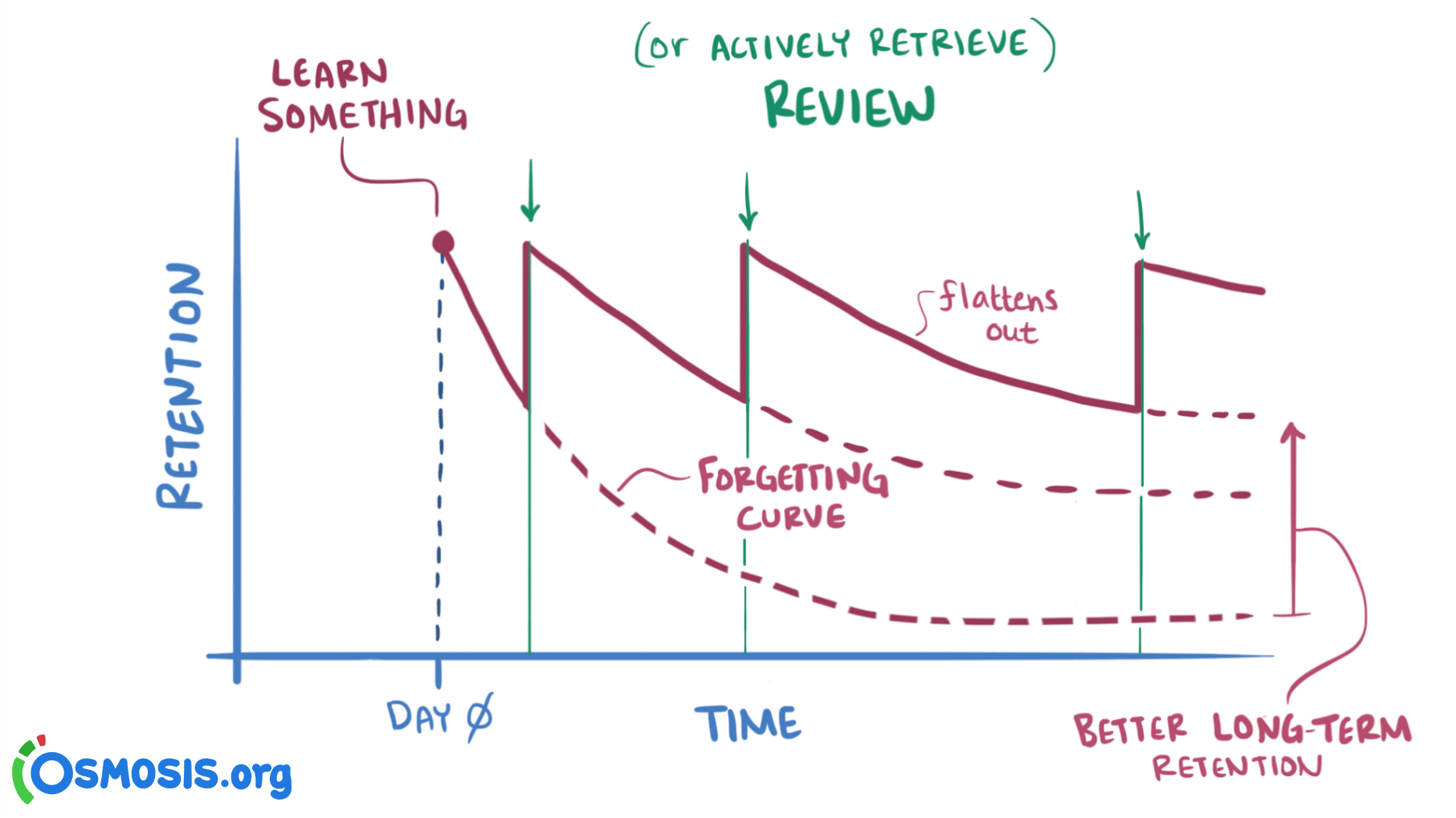
Strategies for this include spaced repetition: going over material at regular intervals to help consolidate it. The evidence shows that the more often we revisit information in this way, the more likely it is to move into long-term memory.
MCQs and past papers
The next phase is tackling MCQs and past papers. Many people see this as the “testing” stage—but I actually consider it part of the revision process itself. The main goal here isn’t how well you score; it’s to identify gaps in your knowledge. I focus mainly on the questions I get wrong.
After completing a set of questions, I make a note of the ones I missed and the additional information I need to learn.
Learning from Mistakes
This is, I think, the differentiating step. Here, I review my notes on the questions and topics I got wrong and make sure I learn those areas thoroughly. This helps iron out any weaknesses in my knowledge.
Mock tests
Once I’ve completed the previous steps, I do a few final mock tests under timed exam conditions. At this stage, I’m not trying to learn anything new. Instead, the goal is to perfect exam technique—managing timing, pacing yourself, and getting comfortable with the format. Doing well here means going into the real exam feeling confident.
Doing well in exams is as much about strategy as it is intelligence. Alongside that, don’t forget to sleep well, eat properly, and take breaks to do things you enjoy. Personally, I can’t revise more than four hours a day—the most I’ve ever done is six. I’d rather start earlier in the year, trust my process, and avoid last-minute panic.
Have a lovely Christmas everyone!
Drug of the week
Orkambi
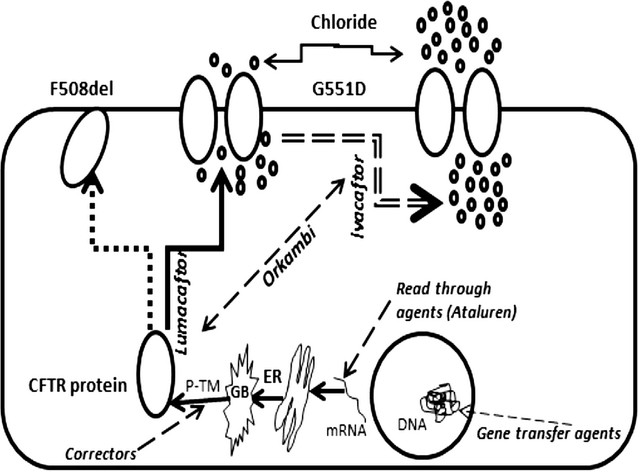
Orkambi is a combination therapy for cystic fibrosis in patients homozygous for the F508del CFTR mutation.
It pairs lumacaftor, a CFTR corrector, with ivacaftor, a CFTR potentiator.
Lumacaftor helps misfolded CFTR protein reach the cell surface.
Ivacaftor keeps the channel open longer once it gets there.
Together, they improve chloride transport—but only modestly.
Clinical benefits include small improvements in lung function and fewer pulmonary exacerbations, rather than dramatic symptom reversal.
Common side effects include chest tightness, dyspnea, headache, nausea, and diarrhea—especially early in treatment.
Orkambi was a major step forward—but also a reminder that early CFTR modulators helped some patients a little, not all patients a lot.
A Brain Teaser
An 18-year-old man presents due a number of itchy skin lesions on his arms and trunk. On examination the lesions are coppery brown in colour and scaly. A diagnosis of pityriasis versicolor is suspected.
Which one of the following is the most appropriate treatment?
A: Topical dapsone
B: Topical fusidic acid
C: Topical ketoconazole
D: Topical hydrocortisone
E: Phototherapy with UVB
Answers
The answer is C – topical ketoconazole
The correct answer in this case is topical ketoconazole. Pityriasis versicolor, also known as tinea versicolor, is a common superficial fungal infection caused by the yeast Malassezia furfur. It typically presents with hypo- or hyperpigmented scaly macules and patches on the trunk and proximal extremities. Topical antifungal agents like ketoconazole are effective in treating pityriasis versicolor. Ketoconazole works by inhibiting the enzyme cytochrome P450 14α-demethylase, which is essential for the synthesis of ergosterol, a crucial component of the fungal cell membrane.
Topical dapsone is an incorrect option as it is primarily used to treat acne vulgaris and dermatitis herpetiformis. Dapsone has antibacterial and anti-inflammatory properties but does not have significant antifungal activity against Malassezia furfur.
Topical fusidic acid is also an incorrect choice because it is an antibiotic with specific activity against gram-positive bacteria such as staphylococci and streptococci. Fusidic acid inhibits bacterial protein synthesis but has no effect on fungal infections like pityriasis versicolor.
Topical hydrocortisone would not be appropriate either, as it is a mild corticosteroid used to reduce inflammation in various skin conditions such as eczema, dermatitis, and insect bites. Hydrocortisone may alleviate itching associated with pityriasis versicolor but will not treat the underlying fungal infection. In fact, using topical steroids can sometimes worsen fungal infections by suppressing local immune responses.
Finally, phototherapy with UVB is not suitable for treating pityriasis versicolor. Phototherapy is mainly used for chronic skin conditions like psoriasis, vitiligo, and severe atopic dermatitis. UVB therapy can be helpful in repigmentation of the skin after successful treatment of pityriasis versicolor but is not effective in eradicating the fungal infection itself.