























































Burnt Toast Theory
Dear Friend,
Hope everyone is doing well. The nights are drawing in now, and I’m definitely feeling that shift into autumn — darker mornings and a lot more coffee to get going.
As with the last few weeks, I’ve been spending time reading little ideas and theories that might give me perspective as I settle into my new role. This week, I came across something called the Burnt Toast Theory, and I thought it was worth sharing.
I think the reason it particularly resonated with me this week is because it has been my first week on-call as an oncology registrar – I have been feeling like burnt toast!
The Burnt Toast Theory
The idea is simple: sometimes when life “burns your toast” — like when something goes wrong, or plans don’t work out — it might actually be for a reason. Maybe that small inconvenience is protecting you from something worse, or redirecting you toward something better.
For example: you burn your toast, you’re delayed a couple of minutes, and unknowingly you avoid a bigger mishap on the road. The message is that setbacks, frustrations, and mistakes might not be pointless — they could be part of a larger plan shaping you in ways you don’t see yet.
Why This Resonates in Medicine
As medical students and junior doctors, we all make small errors. Forgetting a cannula flush. Miswriting a drug dose (before it’s thankfully picked up). Missing a subtle sign on an X-ray and getting corrected in teaching.
In the moment, these things feel painful — embarrassing even. But just like burnt toast, they might serve a hidden purpose. Each slip teaches us vigilance, humility, or the importance of double-checking. The lessons sting, but they stick.
The Hidden Gift of Small Errors
I’ve started to think that these little mistakes are part of the process of becoming a safer, stronger doctor. They build the habits that protect our patients in the long run. In fact, the doctors we admire most usually aren’t the ones who’ve never tripped up — they’re the ones who’ve learned from those small stumbles and grown wiser because of them.
How I’m Applying This Lesson
In oncology, the learning curve is steep. There are endless protocols, drug regimens, and side effects to keep straight. I’ve already had moments where I’ve got things wrong. But instead of beating myself up, I’m trying to reframe them as “burnt toast moments” — a bit uncomfortable now, but possibly saving me from a much bigger mistake down the line.
A Few Key Takeaways
Not all mistakes are disasters — some are lessons in disguise.
The discomfort you feel when you slip up is often the thing that ensures you won’t repeat it.
Every “burnt toast moment” might just be part of shaping you into the clinician you’re meant to become.
So next time you make a small error and feel that sinking feeling, remember the burnt toast theory. It might just be the lesson that makes you better in the long run.
Drug of the week
Filgrastim
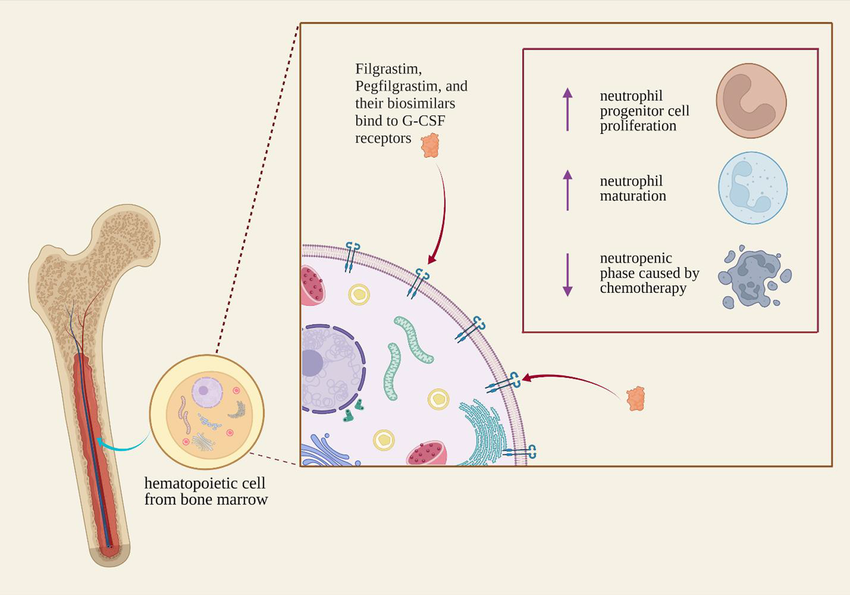
Filgrastim is a recombinant granulocyte colony-stimulating factor (G-CSF) that stimulates the bone marrow to produce neutrophils, reducing the duration of chemotherapy-induced neutropenia.
It is given by subcutaneous injection or IV infusion and is used in patients receiving myelosuppressive chemotherapy, those undergoing bone marrow transplantation, and in severe chronic neutropenia.
Common side effects include bone pain, fever, headache, and injection site reactions.
Important adverse effects are splenomegaly and rare splenic rupture, acute respiratory distress syndrome (ARDS), capillary leak syndrome, and leukocytosis at high doses.
A Brain Teaser
A 24-year-old man presents to his follow-up psychiatry appointment after being prescribed Risperidone for a new diagnosis of schizophrenia. He has been stable since starting this medication but complains of milky discharge from both nipples and asks if another medication can control his schizophrenia without causing nipple discharge.
What medication would be most appropriate to try next?
A: Aripiprazole
B: Chlorpromazine
C: Clozapine
D: Haloperidol
E: Olanzapine
Answers
The answer is A – aripiprazole.
Aripiprazole is correct – Aripiprazole is an atypical antipsychotic with the most tolerable side effect profile and is particularly effective in preventing a rise in prolactin levels. Therefore it is the most appropriate medication to trial for this patient as his nipple discharge is likely caused by high prolactin levels.
Chlorpromazine is incorrect – Chlorpromazine is a typical antipsychotic. There is a higher chance of extrapyramidal side effects with typical antipsychotics. Atypical antipsychotics would be more appropriate to trial for this patient due to the increased risk of side effects with typical antipsychotics and his schizophrenia is already well controlled on an atypical antipsychotic.
Clozapine is incorrect – Clozapine is an atypical antipsychotic used for treatment-resistant schizophrenia. Two other antipsychotics must have been trialled before clozapine is trialled due to its large side effect profile so it would be inappropriate to trial in this patient.
Haloperidol is incorrect – Haloperidol is a typical antipsychotic. There is a higher chance of extrapyramidal side effects with typical antipsychotics.
Olanzapine is incorrect – Olanzapine is an atypical antipsychotic but has a risk of metabolic syndrome. Aripiprazole would be more appropriate for this patient as there is a lower risk of metabolic syndrome and it is more effective in preventing rises in prolactin levels.