

























































Broken Window Theory
Dear Friend,
Hope everyone is having a good week. Summer is well and truly over and the weather is definitely reminding me of that everyday. You may notice that the drug of the week section is becoming more and more oncology focussed – that may have something to do with me starting my new job and being inundated with all these new drugs, mechanisms of actions and side effects to learn.
Similarly to last week, I have doing a lot of reading online to get bits of knowledge on how to succeed at my new job. And this week, I came across the Broken Window theory, which I found particularly interesting.
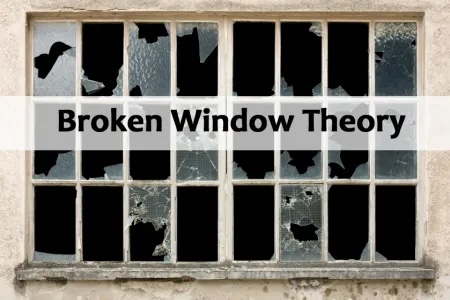
In 1982, social scientists James Q. Wilson and George Kelling introduced the “Broken Window Theory.” They suggested that if a single broken window in a neighbourhood is left unrepaired, it signals neglect—and soon, more windows are smashed, vandalism spreads, and crime escalates.
A simple example: a graffitied wall left untouched can attract more graffiti, littering, and eventually more serious anti-social behaviour. The key idea is that small signs of disorder, if ignored, can snowball into bigger problems.
This idea really resonates with me in medicine.
The Danger of Overlooking the “Small Stuff”
As medical students and junior doctors, it’s easy to brush off the little errors:
“That blood result looks a bit odd, but I’m sure it’s fine.”
“I’ll rewrite that drug chart later.”
“I’ll double-check the fluid prescription tomorrow.”
But just like broken windows, these “minor” slips can spiral into much bigger issues if left unaddressed. The small mistakes are often the first cracks where bigger problems take root.
The Power of Early Action
Catching and correcting things early—whether that’s clarifying a drug dose, rechecking an observation, or chasing an investigation—can prevent escalation. It’s not glamorous work, and it doesn’t always feel “big,” but it’s these details that keep patients safe and teams running smoothly.
How I’m Applying This Lesson
In my new post as an oncology registrar, I’ve been trying to use this mindset. I’ve realised that paying attention to the small details at an early stage—whether in documentation, treatment plans, or patient reviews—makes a huge difference later on.
By fixing the “broken windows” before they spread, I’m learning that small acts of diligence build trust, prevent crises, and ultimately make me a better clinician.
A Few Key Takeaways
Little problems grow into big problems if ignored.
Addressing small errors early builds safety, trust, and good habits.
Medicine is full of “broken windows”—spot them, fix them, and you’ll stop bigger cracks from forming.
So next time you’re tempted to let a “minor” error slide, remember the broken window theory. The details matter—especially when they stop bigger issues before they even begin.
Drug of the week
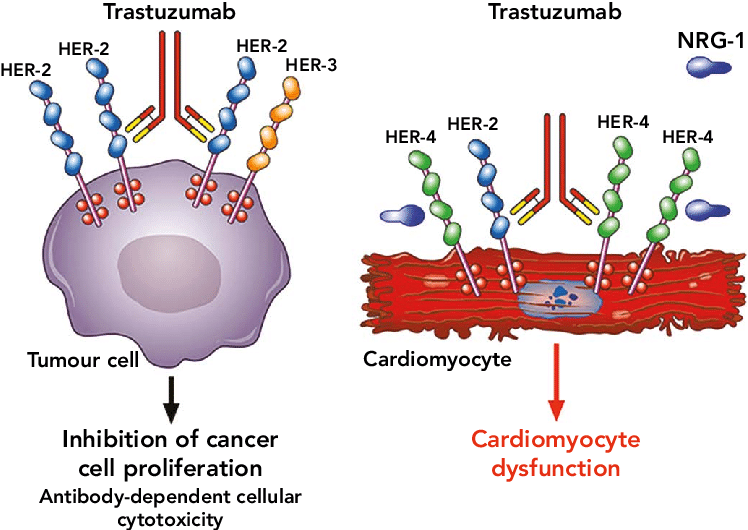
Trastuzumab (Herceptin)
Trastuzumab is a monoclonal antibody that targets the HER2 receptor, inhibiting signalling pathways that drive tumour cell growth and survival in HER2-positive cancers.
It is given by IV infusion (and sometimes subcutaneously) and is used in HER2-positive breast cancers, gastric cancer, and gastro-oesophageal junction cancer.
Common side effects include infusion-related reactions, fever, chills, headache, and nausea.
Important adverse effects are cardiotoxicity (reduced left ventricular function and heart failure) and infusion-related hypersensitivity reactions.
A Brain Teaser
A team of neurologists has established a study to explore the association between anticholinergic drug prescription and the onset of frontotemporal dementia before the age of 50. They acquired a list of patients from the GP practices in their local area through the use of coding systems. The findings indicate that patients prescribed anticholinergic drugs in the year preceding disease onset had odds of developing frontotemporal dementia at 1.15, with a 95% confidence interval ranging from 1.08 to 1.19, compared to those who did not.
What type of study was conducted?
A: Case-control study
B: Cross-sectional study
C: Prospective cohort study
D: Randomised control trial
E: Retrospective cohort study
Answers
The answer is A – Case control study.
The correct answer is a case-control study. This type of research design is being utilised by investigators to explore the association between anticholinergic medication use and the incidence of young-onset frontotemporal dementia, which is an infrequent neurological disorder. The findings are presented as odds ratios, indicating that a case-control study methodology has been adopted. A case-control study is an observational research approach frequently employed to examine conditions that are rare or have low prevalence rates. It involves comparing a group of subjects who have the disease of interest (cases) with a closely matched group without the disease (controls). Such studies are inherently retrospective; after identifying the cases, researchers determine past exposure to potential risk factors through examination of clinical records, noting that these patients were sourced from general practice settings.
Odds ratios are conventionally applied in case-control studies as they provide a measure of the association between exposure to risk factors and health outcomes. An elevated odds ratio in one group compared with another suggests a stronger association between the exposure under investigation and the resultant condition. Analysing odds ratios enables researchers to elucidate both the magnitude and directionality of associations between exposures and outcomes, thus enhancing our understanding of contributory factors, but cannot fully confirm causation.
Cross-sectional study is an incorrect option. These studies capture data at a single point in time, thereby providing an instantaneous representation of disease prevalence within a population. These studies are advantageous due to their ability to gather diverse data points swiftly and economically, often employing surveys as their primary tool for data collection. Results from cross-sectional studies are typically expressed as percentages or absolute numbers that reflect disease prevalence within a cohort.
Prospective cohort study is an incorrect option. This represents an observational research strategy where a large sample (cohort) of individuals without the disease is followed over time to assess whether they develop it after exposure to certain risk factors. Such studies offer robust evidence for causative relationships by establishing temporal sequences and minimising recall bias through regular data collection processes. However, organising prospective cohort studies can be challenging, particularly when investigating rare diseases. Moreover, these studies generally report relative risks rather than odds ratios.
Randomised control trials is an incorrect option. This constitutes one of the pinnacle methodologies in experimental clinical research. Participants in these trials are randomly assigned to either treatment or control groups, with blinding implemented for both participants and researchers regarding allocation status when feasible. To conduct such a trial, it is necessary first to identify an innovative intervention (treatment arm) alongside an established standard-of-care intervention (control arm). Various predefined outcomes are measured across both groups to determine whether the novel intervention offers any benefit over existing treatments. The primary aim here is comparative efficacy assessment rather than causal relationship establishment.
A retrospective cohort study is an incorrect option. This type of study focuses on individuals who share common exposures or risk factors for certain diseases or conditions in observational settings. These studies facilitate the selection of cohorts based on specific exposures and subsequent monitoring for the development of particular outcomes over time. In this scenario, if we were conducting such a study concerning anticholinergic drugs, we would review patient records from general practices for those prescribed anticholinergics and track subsequent dementia diagnoses’rendering this option inappropriate for this question’s context.