


























































Goodbye “Junior” Doctors – now “Resident” Doctors
Dear Friend,
Hope you are all having a lovely weekend. Why do holidays seem to end so quickly? Before you know it, it’s time to work again. And what better way to get back into work than with a week of night shifts.
You may have heard in the news recently that in the last month, Junior doctors will now be called “resident doctors” after the Government agreed a name change with the British Medical Association. The BMA said the move would help better reflect the expertise of medics working in the NHS, some of whom had years of experience despite their “junior” title.
Dr Vivek Trivedi, co-chairman of the BMA’s Junior Doctors Committee, said: “(The term) ‘junior’ denotes many things, and I think people get the wrong impression and think, sometimes we’re students, sometimes we’re not fully qualified.
“And ‘junior’ can represent any doctor from the year one of graduating, after five to six years of university, all the way up to 10 plus years in a specialty – these are people who might be doing cardiac surgery, brain surgery, seeing patients in complex cancer clinics for example, the work they’re doing is anything but junior.
“And so, (the term) resident doctor helps denote their expertise.”
I have experienced this firsthand when introducing myself to patients. A lot of times, patients think that the term junior doctors refers to medical students or foundation doctors. From personal experience, patients were shocked to find out that anyone under consultant, including senior registrars also fall under the umbrella of junior doctors.

Will this make any difference?
One of the main reasons for this name change was to give doctors approproate recognition of their seniority and expertise. Specifically, labelling is important because unconscious bias leads people, including other staff, to make assumptions about someone’s seniority or role, and this can worsen patient care. Many resident doctors don’t get treated as doctors, and this is especially true of the 57% who are women and the 45% from an ethnic minority background.
Whilst the name change is a good start, if you interview a group of resident doctors, how many would propose that their name is highest on the priority list? Is fixing the pay, the working conditions, the training opportunities not more important?
Similarly, the new name again does not differentiate between any of the grades below consultant. Should a senior registrar one year away from becoming a consultant be called the same term as a foundation doctor? In the medical community, we commonly refer to doctors in 4 groups: foundation year 1 doctor, senior house officer (SHO), registrar and consultant. Would the public not be able to learn that? Especially when such a system is also used in the USA – intern, resident and attending physician.
It is too early to see what difference this name change will make. But, I guess even a small positive step, is a positive change nonetheless. Anyways, gone is the era of the junior doctors, let’s see if the era of resident doctors is more positive.
Have a lovely week. For me it’s time to start reversing my sleep schedule.
Drug of the week
Pemtrexed
Pemetrexed, sold under the brand name Alimta among others, is a chemotherapy medication for the treatment of mesothelioma and non-small cell lung cancer.
Pemetrexed is chemically similar to folic acid and is in the class of chemotherapy drugs called folate antimetabolites.
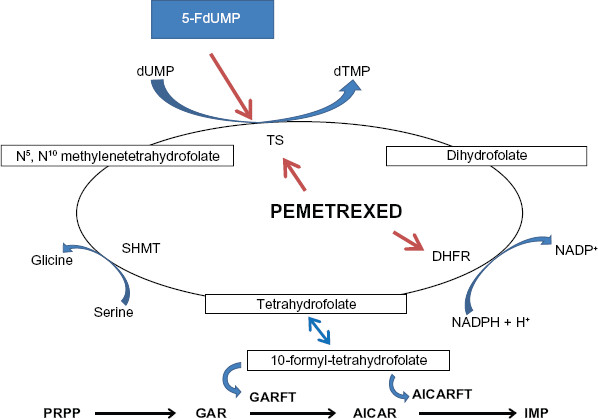
It works by inhibiting three enzymes used in purine and pyrimidine synthesis—thymidylate synthase (TS), dihydrofolate reductase (DHFR), and glycinamide ribonucleotide formyltransferase.
By inhibiting the formation of precursor purine and pyrimidine nucleotides, pemetrexed prevents the formation of DNA and RNA, which are required for the growth and survival of both normal cells and cancer cells.
A Brain Teaser
A 5-year-old girl attends clinic with her father. She is being investigated following recurrent fractures, poor dental formation, hearing loss and abnormal bone growth. A diagnosis of osteogenesis imperfecta is suspected.
Which blood results would you expect to see?
A: Raised adjusted calcium, raised PTH (parathyroid hormone), normal ALP (alkaline phosphatase) and low PO4 (phosphate)
B: Low adjusted calcium, low PTH, normal ALP and raised PO4
C: Low adjusted calcium, high PTH, normal ALP and low PO4
D: Raised adjusted calcium, low PTH, raised ALP and raised PO4
E: Normal adjusted calcium, normal PTH, normal ALP and normal PO
Answers
The answer is E.
Adjusted calcium, PTH, ALP and PO4 levels are usually normal in osteogenesis imperfecta. This is also known as brittle bone disease. It is a group of disorders of collagen metabolism, resulting in bone frailty and fractures. The most common and mild form is type 1. Presenting features include fractures following minor trauma, blue sclera, deafness secondary to otosclerosis and dental imperfection. It is usually diagnosed in childhood.
A raised adjusted calcium raised PTH, normal ALP and low PO4 may be seen in primary hyperparathyroidism. ALP may be normal or raised here.
Low adjusted calcium, low PTH, normal ALP and raised PO4 may be seen in hypoparathyroidism.
Low adjusted calcium, high PTH, normal ALP and low PO4 can be seen in secondary hyperparathyroidism. PO4 levels can be variable here.
Raised adjusted calcium, low PTH, raised ALP and raised PO4 may be seen when there is a malignant PTH related protein. This can occur in certain cancers including squamous cell lung cancer. ALP may be normal here also.